Draft note. Details and supporting sources are still being reviewed.
The Big Valley bottoms along the Colorado offered water and grazing. The limestone uplands above them carried cedar brakes and thin soil. By the middle of the 1880s, the railroad had put Goldthwaite on the map and barbed wire was redrawing a country that cattlemen had treated as open range.
Water, grazing, and fences
These are everyday concerns for Jay. He needs water and grass for the herd, while fencing disputes bring neighbors into his office. By the fall of 1887, he is selling steers because the range cannot support the cattle already on it.
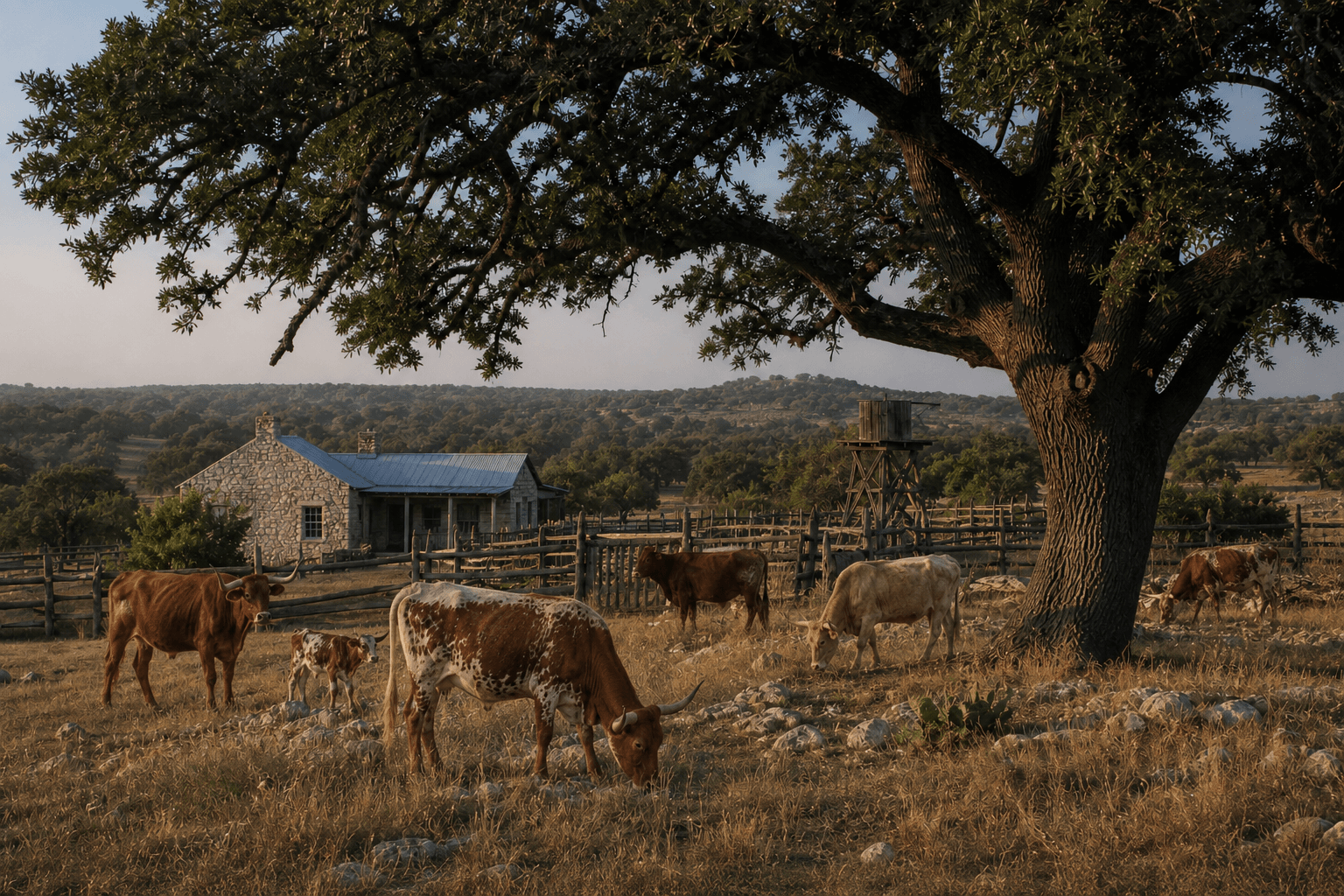
The ranch artwork uses the same setting: a limestone house, live oaks, and cattle grazing near the Colorado. The Historical Context section covers the period; source notes are still being compiled.
Back to Trail Notes